
Turkoois steen: kenmerken, betekenis en gebruik in sieraden
Turkoois steen: kenmerken, betekenis en gebruik in sieraden
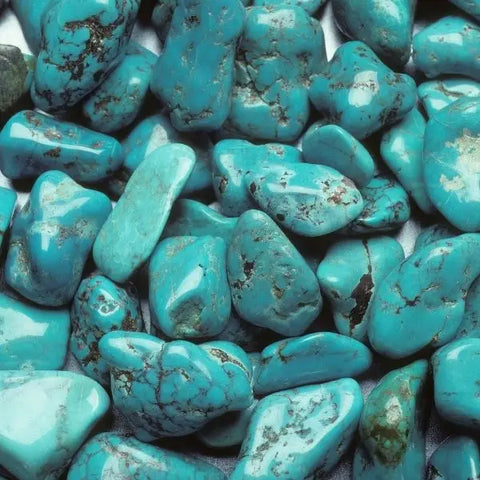
Turkoois is een ondoorzichtige steen met een kenmerkende blauwgroene kleur, soms met bruinzwarte aders (de matrix). De kleur wordt bepaald door het kopergehalte: hoe meer koper, hoe blauwer. Turkoois is een van de oudste sierstenen ter wereld — al duizenden jaren gebruikt door Egyptenaren, Perzen en inheemse volkeren van Noord-Amerika.
Kenmerken van turkoois
- Kleur – hemelsblauw tot groenblauw; matrix van bruinzwarte aders is kenmerkend
- Hardheid – 5 tot 6 op de Mohs-schaal; zachter dan veel andere stenen; voorzichtig met ringen voor dagelijks gebruik
- Glans – wasachtig tot mat na polijsten; ondoorzichtig
- Vindplaatsen – Iran (felblauw, hoge kwaliteit), VS (Arizona, Nevada), China, Egypte
Behandeld vs. onbehandeld turkoois
Omdat turkoois relatief zacht is, wordt het vaak gestabiliseerd met hars om de hardheid te verhogen en de kleur te beschermen. Gestabiliseerde turkoois is duurzamer en betaalbaarder. Onbehandeld turkoois is zeldzamer en heeft meestal een hogere waarde. In sieraden op ons niveau wordt gestabiliseerde turkoois gebruikt.
Turkoois in sieraden
Turkoois wordt als cabochon (glad gewelfd) geslepen vanwege de ondoorzichtigheid. Populair in bohemien en natuurlijke stijlen. Bekijk onze natuurstenen sieraden voor turkoois stijlen.
Spirituele betekenis van turkoois
Turkoois staat in veel culturen bekend als een beschermende steen. Het wordt geassocieerd met vrede, communicatie en emotionele balans. In spirituele praktijken wordt het gekoppeld aan het keelchakra en gebruikt om open communicatie en eerlijkheid te bevorderen.
- Is turkoois geschikt voor dagelijks gebruik?
- In oorbellen en hangers prima — met een hardheid van 5 tot 6 is turkoois minder geschikt voor ringen die dagelijks intensief worden gebruikt. Vermijd stoten en krassen. Bewaar apart van hardere sieraden.
- Hoe onderhoud ik turkoois sieraden?
- Reinig voorzichtig met een zachte vochtige doek. Geen agressieve schoonmaakmiddelen, geen ultrasoon reinigen en niet onderdompelen — turkoois is poreus en absorbeert vloeistoffen. Lees meer op onze schoonmaakpagina.
- Wordt turkoois verkleurd door parfum of zweet?
- Ja — turkoois is poreus en kan verkleuren door contact met parfum, zonnebrand en zweet. Doe turkoois sieraden als laatste om en vermijd direct contact met huidverzorgingsproducten.